Geopolitical Backdrop
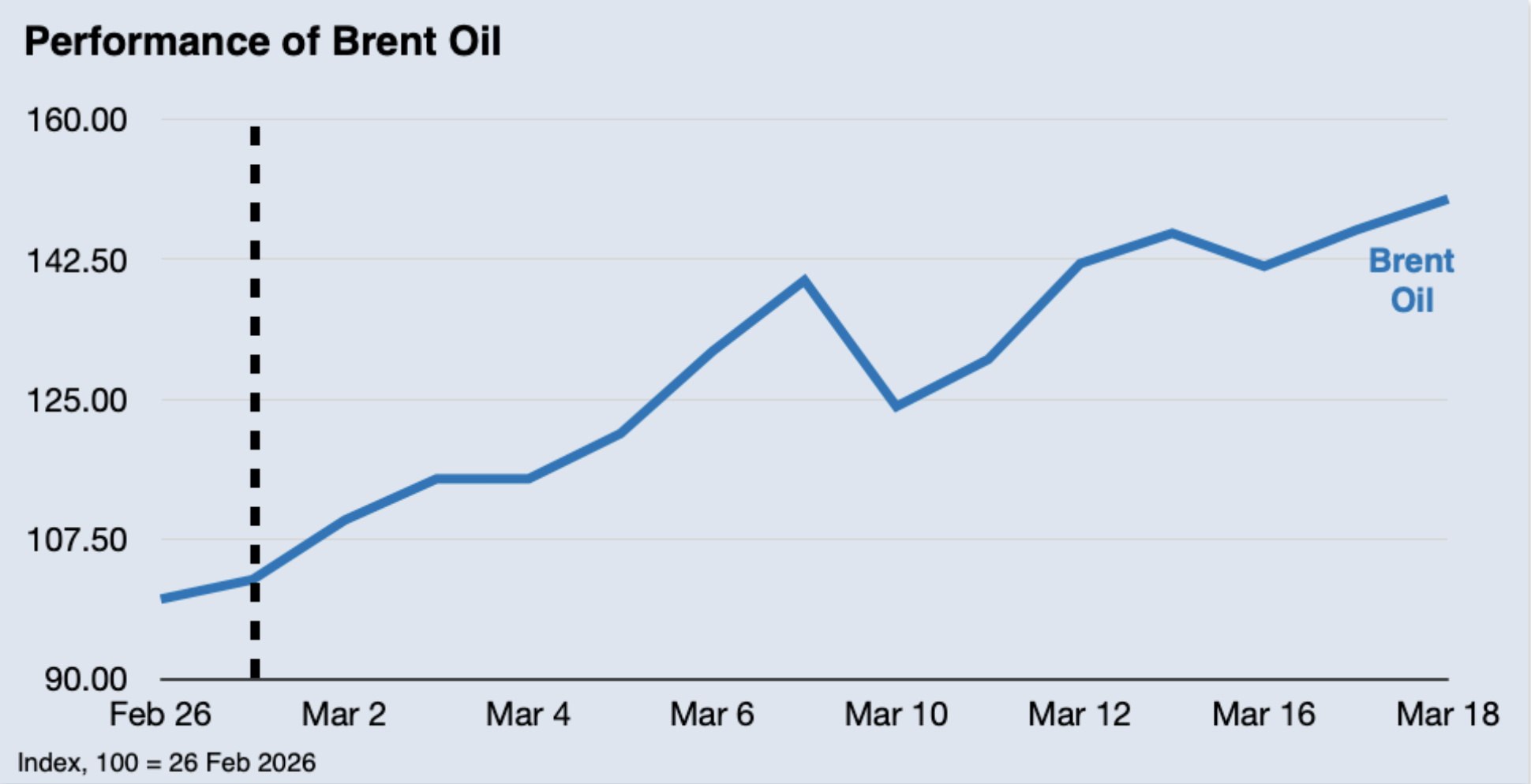
On February 28, the United States and Israel carried out a series of strikes against Iran, marking a significant escalation of tensions in the Middle East. In the days that followed, Iran responded by disrupting transit through the Strait of Hormuz, a strategic corridor through which approximately 20% of global oil supply is transported.
Given the region’s critical role in global energy markets, this development increases the risk of supply disruptions and adds considerable uncertainty regarding the trajectory of the conflict and its broader economic implications.
Market Reaction
- Oil & Energy: Oil prices have surpassed USD 100 per barrel, driven by heightened supply-side risks. This is contributing to increased inflationary pressures and weighing on energy-intensive sectors.
- U.S. Dollar: The U.S. dollar has strengthened, supported by its role as a safe-haven asset. The DXY Index has recorded a notable increase since the onset of the conflict.
- U.S. Treasuries (10-year): Yields have risen above 4%, reflecting elevated inflation expectations and a more expansionary fiscal outlook. Safe-haven demand has been more limited compared to previous geopolitical episodes.
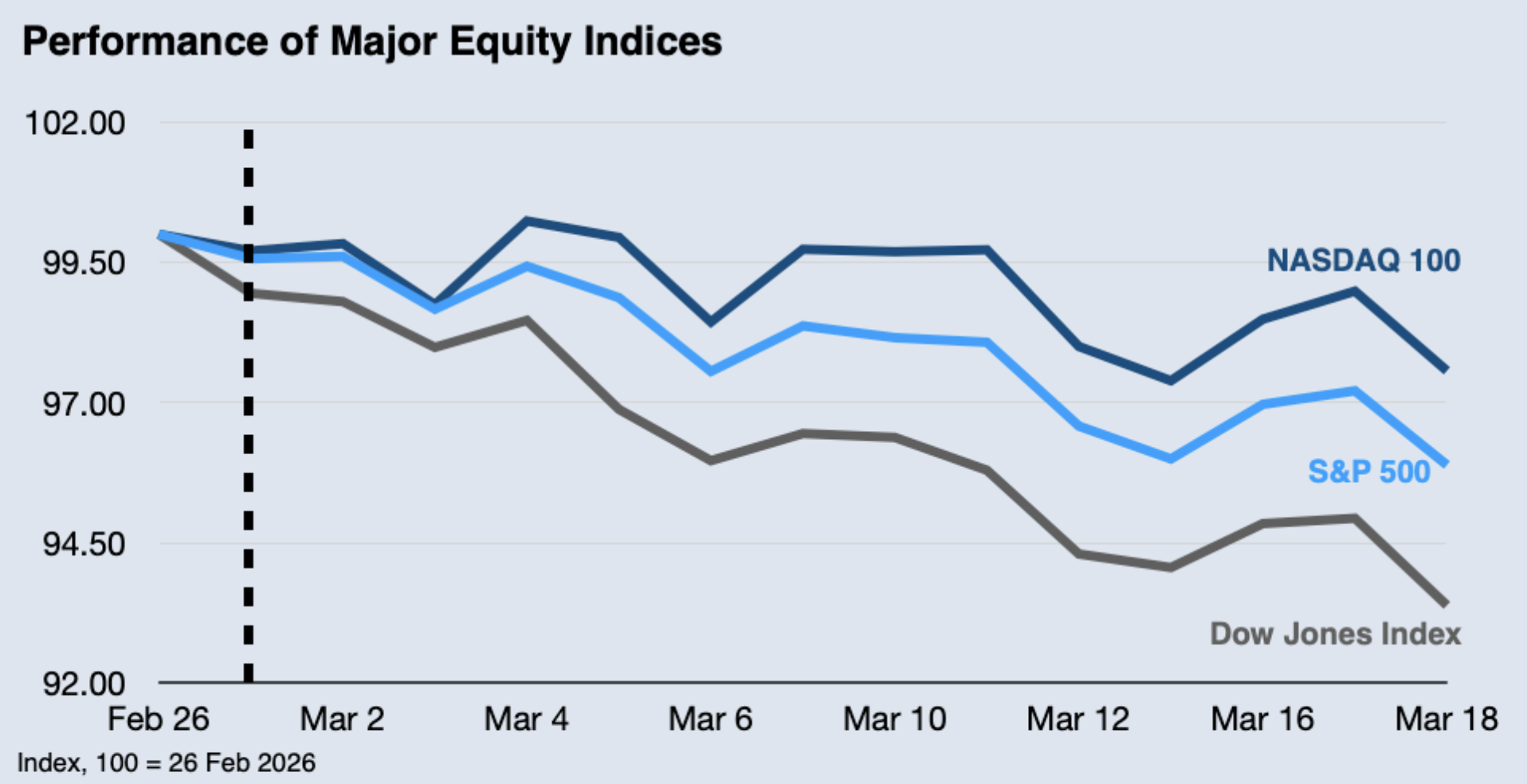
- Equity Markets: Major equity indices have trended downward, with more pronounced declines in cyclical and growth sectors. In contrast, energy and defensive sectors have demonstrated relative resilience amid heightened market volatility.
What to expect?
If the conflict persists or escalates further, the following trends may materialize:
- Sustained elevated oil prices due to ongoing supply-side risks.
- Increased inflationary pressures driven by higher energy costs.
- Greater volatility across financial markets, with heightened sensitivity to geopolitical developments.
- Reduced scope for interest rate cuts by the Federal Reserve.
- Downside risks to global economic growth, particularly in energy-importing economies.


